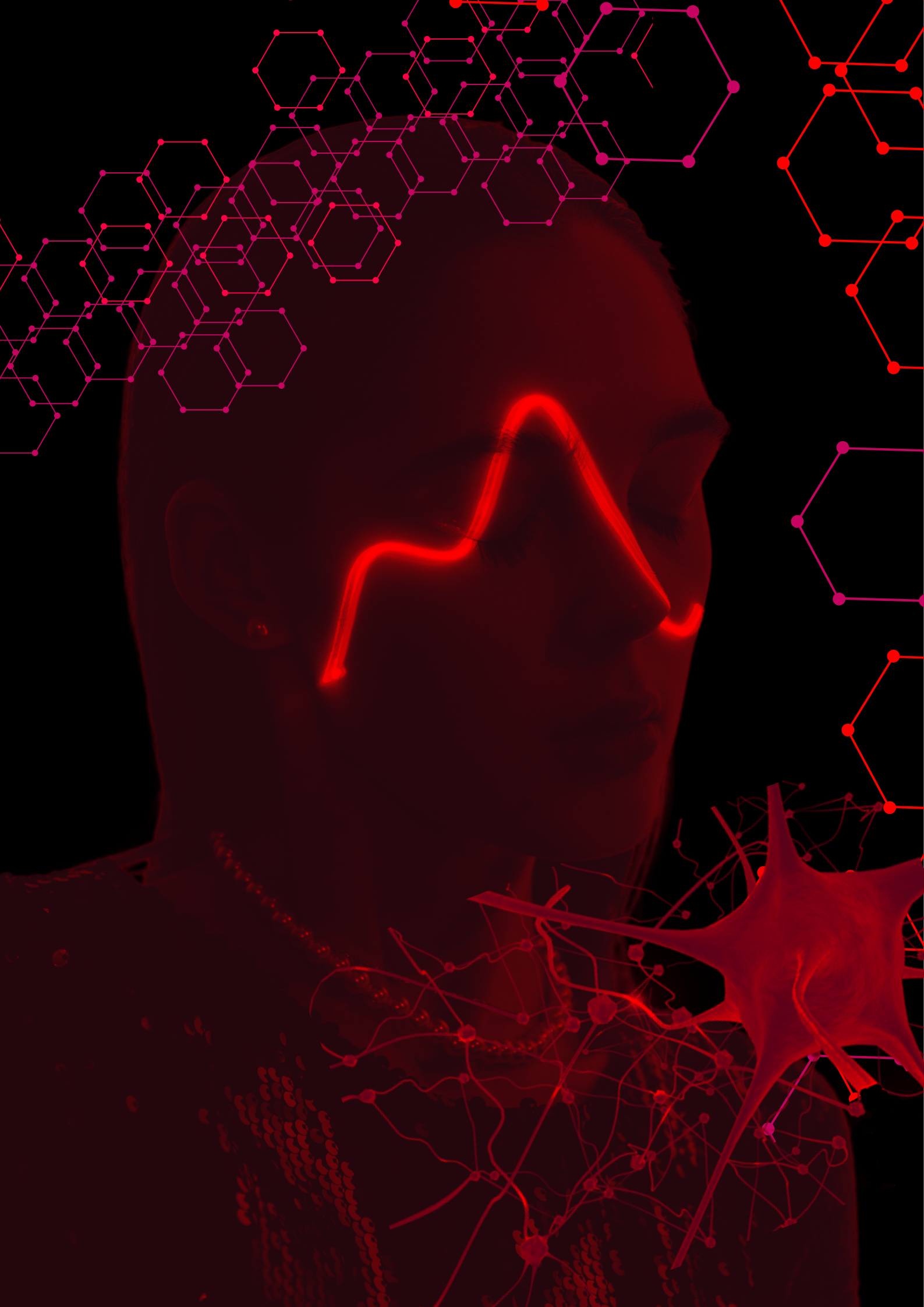
There is something I’ve been thinking a lot about recently and have even started writing this small essay on the theme. What gave me the ability to finalise my thoughts was a talk I heard today by Nanthia Suthana, “From Lab to Real World: Multiscale Neural Dynamics of Human Memory in Motion”.
But first, I want to step back and give you a bit of the context you might already have.
If you live in your literate techno bubble, you may think that AI is, in general, a useful technology with some issues, but none of them are serious enough.
Though AI, like any other tool, can also be easily misused, humanity has not created enough harnesses and guardrails to keep the bad influence away from the general population.
People don’t understand what exactly is going on behind the word AI; they feed their own delusions, since using a chatbot is a much easier way to get validation than talking to your peers. And LLMs can validate almost anything, even with rules written in them (if they even were written). Benchmarks need to be reevaluated constantly. Recently, the study showed that AI can act cautiously if it thinks it is being assessed on its safety and perform better for common scoring methods.
But that’s just evidence of rapid progress not being anticipated earlier. Resources weren’t allocated properly in time. No one listened closely to those who predicted and argued in defence of regulations and AI safety even before it became a hyped theme. For decades, actually. The first person who most probably tried to warn humanity conceptually about such a risk was Alan Turing. In this century, it was Yudkowsky—after 5 years of working toward achieving AI singularity—who understood that what research actually needs is AI alignment, even before the term itself existed. This is the same structural failure I see in our ignorance today, one domain earlier.
Hence, today I want to raise awareness about the other probable scenario and issue. The concept at stake is cognitive liberty—the fundamental right of every person to absolute self-determination and sovereignty over their own brain and mental experiences.
There is significant progress in BCI development. More than that, there are methods that utilise micro-stimulation. Efferent BCIs can now give patients the ability to experience sensations they’ve lost due to some injury: bionic hands, cochlear implants. Those devices have existed for years and even decades, and they’re the ones that control the senses.
What bothers me most here is that we, as a society, don’t think enough about what can happen if and when we start “messing with our brains”. Science, in general, is always looking for ways to make people’s lives easier. Cure diseases, create accessible accommodations, improve treatment efficiency and so on. Despite that, any genuinely helpful tool can be used to cause harm and can be used with negligence.
How often does your agent do something you didn’t participate in and didn’t anticipate at all? I still mostly manually approve all agents’ actions when they operate on my own machine (for pipelines using agents, the exact tasks can be governed in a way that’s mostly safe and doesn’t cause any issues, however). But what would you do if we learned how to “write” information into your brain before we know most of its caveats and processes we need to keep track of? NeuroPace’s RNS System, for instance, autonomously detects seizure activity and delivers a corrective pulse—no human approves each individual action.
Computers and systems in general are human-made, and we know what’s going on inside at least at a certain level, or we can dive deep easily and debug any issue. Even with so-called black-box models, we know where they live (at least for now) and can turn something off in a bad scenario. But you can’t safely pause or turn off your own brain if it goes rogue.
The most dangerous scenario, as I see it, is when we start using micro-stimulations. Yes, they might help us to ease pain, or to improve knowledge recall. Even help with PTSD and epilepsy, as they are already helping now. For instance, Nanthia Suthana’s lab is working with patients with PTSD, and I truly admire their progress. Nevertheless, I was deeply concerned that in one of her earlier studies subjects stimulated in the entorhinal-hippocampal circuit reported noticing nothing at currents that measurably changed their memory performance. In the wrong hands, those subtle stimulations might actually reprogram the way people think. And you might never actually notice it.
So my proposal here is to start investigating possible scenarios and create rulebooks, regulations, and guardrails (and you name anything that’s applicable here) beforehand, rather than when it’ll be too late.
Of course, if we continue living in this primarily monopoly-heavy capitalistic economy, we’ll probably be observing how some big companies abuse laws and existing regulations just to win the race, but I hope if we have more prepared materials to gain the momentum and keep safeguarding participants of any experiment or practice against dangers of “be the first and conquer the market” paradigm, we still have a chance. So if you are working on any system that is close to being out of the lab today, especially if you are in the industry and have a resource to raise this question with your superiors and mates—please do it.
Editing note: drafted and argued by me; Grammarly for grammar; Claude (Anthropic) for proofreading, citation-checking, and structural feedback on this piece.